
Following a budget revision by the National Science Centre (NCN), Emilia’s project, “Unlocking the Potential of Ion-Transfer Voltammetry-Based Electronic Tongues for Date-Rape Drug Detection in Real Samples,” has been awarded funding under the SONATA BIS 13 call. This funding scheme, aimed at PhD holders who obtained their degrees 5-12 years before the call, is a natural progression from the SONATA project Emilia is currently developing.
Interviews held in the NCN headquartes gave Emilia the opporunity to visit some of the numerous Cracov museums, which can explain the Malczewski painting…
The project, spanning five years from August 2024 to July 2029, will support the addition of two new PhD students and several BSc and MSc interns to the Sensor Array group. The primary objective is to develop an electronic tongue based on redox- and ion-sensitive voltammetric sensors. These sensors will be rigorously tested on real samples of drugs and food products. The resulting system will enhance the understanding of designing sensor arrays for detecting non-trivial analytes in samples with varying background signals, such as pollutants in wastewater, pesticides in food, and biomarkers in body fluids.
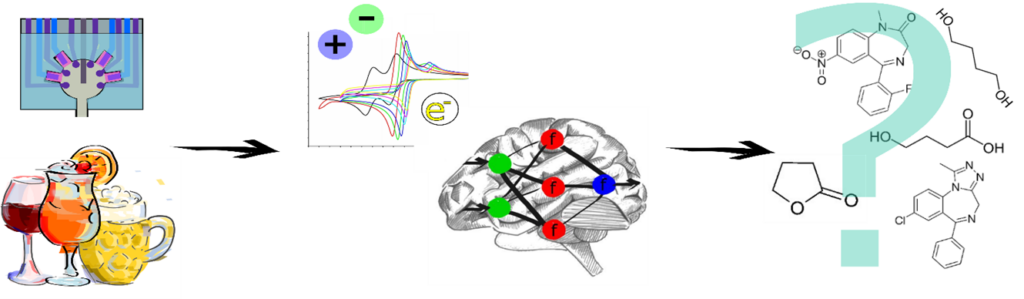
Date-rape drugs, which can incapacitate individuals and make them vulnerable to theft and sexual assault, pose significant detection challenges due to their lack of color, taste, and odor, as well as their short half-life in the body. Prevention, rather than post-hoc analysis, is crucial. Providing potential victims with a means to detect these drugs using specialized sensors is a practical approach.

However, the variety of molecules involved (such as gamma-hydroxybutyric acid, gamma-butyrolactone, butane-1,4-diol, and benzodiazepines) and the wide range of sample types (including alcoholic and non-alcoholic beverages and food) complicate the development of a comprehensive detection solution.
The project involves collaboration with forensic labs and two laboratories in Spain specializing in recognition molecules and nanomaterials.
Stay tuned for upcoming job offers as the project kicks off.