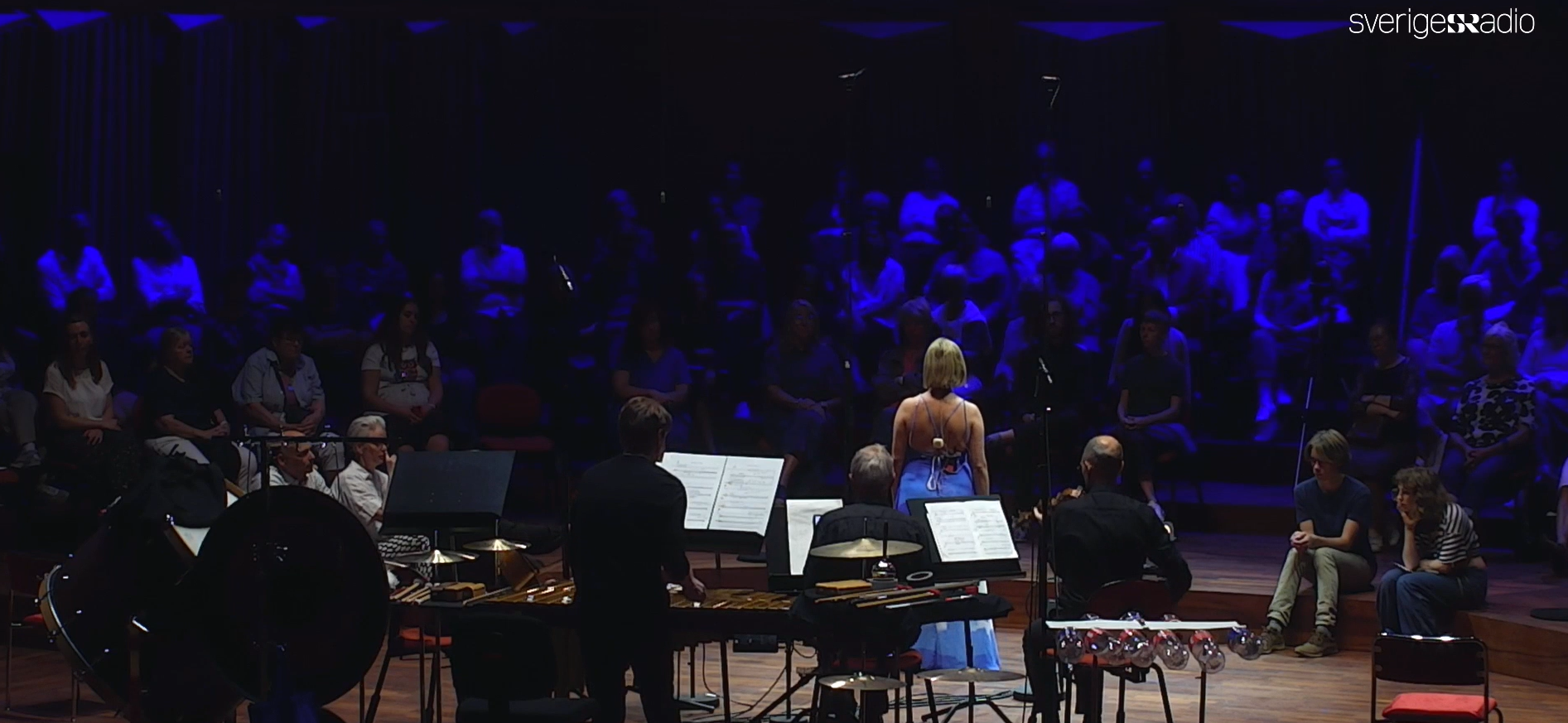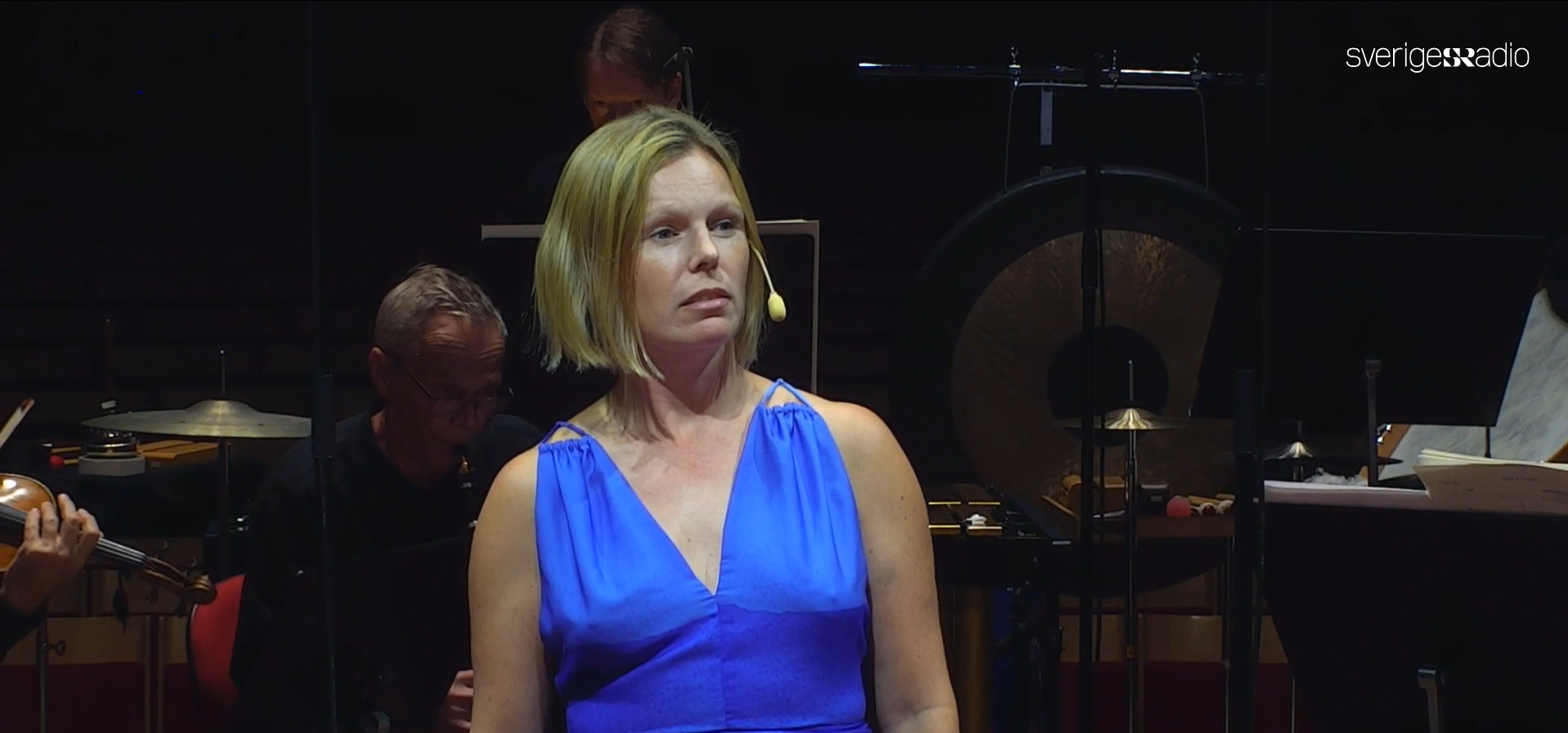
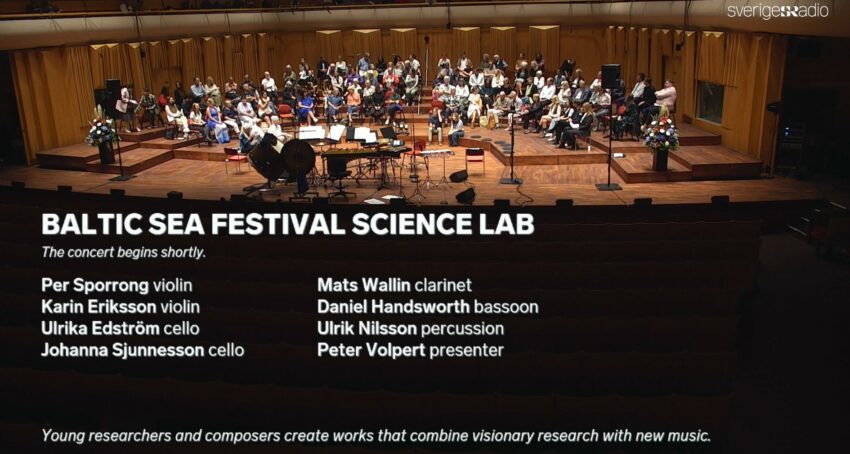
After months of preparation, on 28 August 2024, Emilia had the opportunity to present science at one of Sweden’s top concert halls. As part of the Baltic Sea Festival, organised by Swedish Radio, a Science Lab session was held. This is an outreach initiative in which six scientists from around the Baltic coast were paired with six composers. The scientists explained their work, and the composers then prepared a musical piece based on the science. The music was accompanied by a story or poem to help explain the scientific problem to the public.
Emilia was paired with Luis Fernando Amaya, who wrote a piece for her called ‘Artificial Tongues’. Born in Aguascalientes, Mexico, Luis is a composer and percussionist based in Oslo. Topics such as collective memory and the relationship between humans and non-humans (e.g. plants, animals or environments) commonly feature in his work. He studied composition and music theory at the Centro de Investigación y Estudios Musicales (CIEM), and he holds a PhD in composition and music technology from Northwestern University. He is currently studying live electronics at the Norwegian Academy of Music.
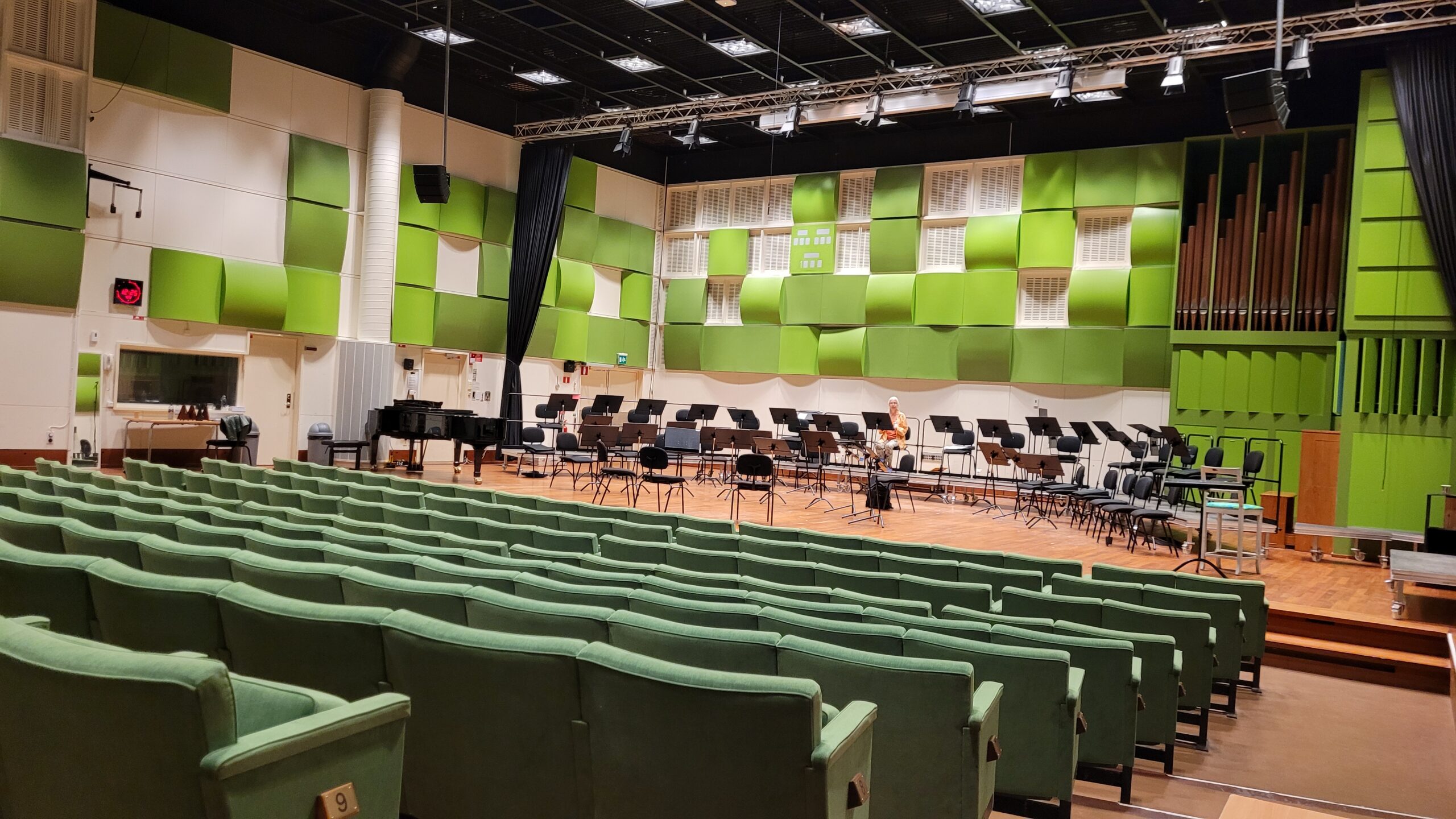
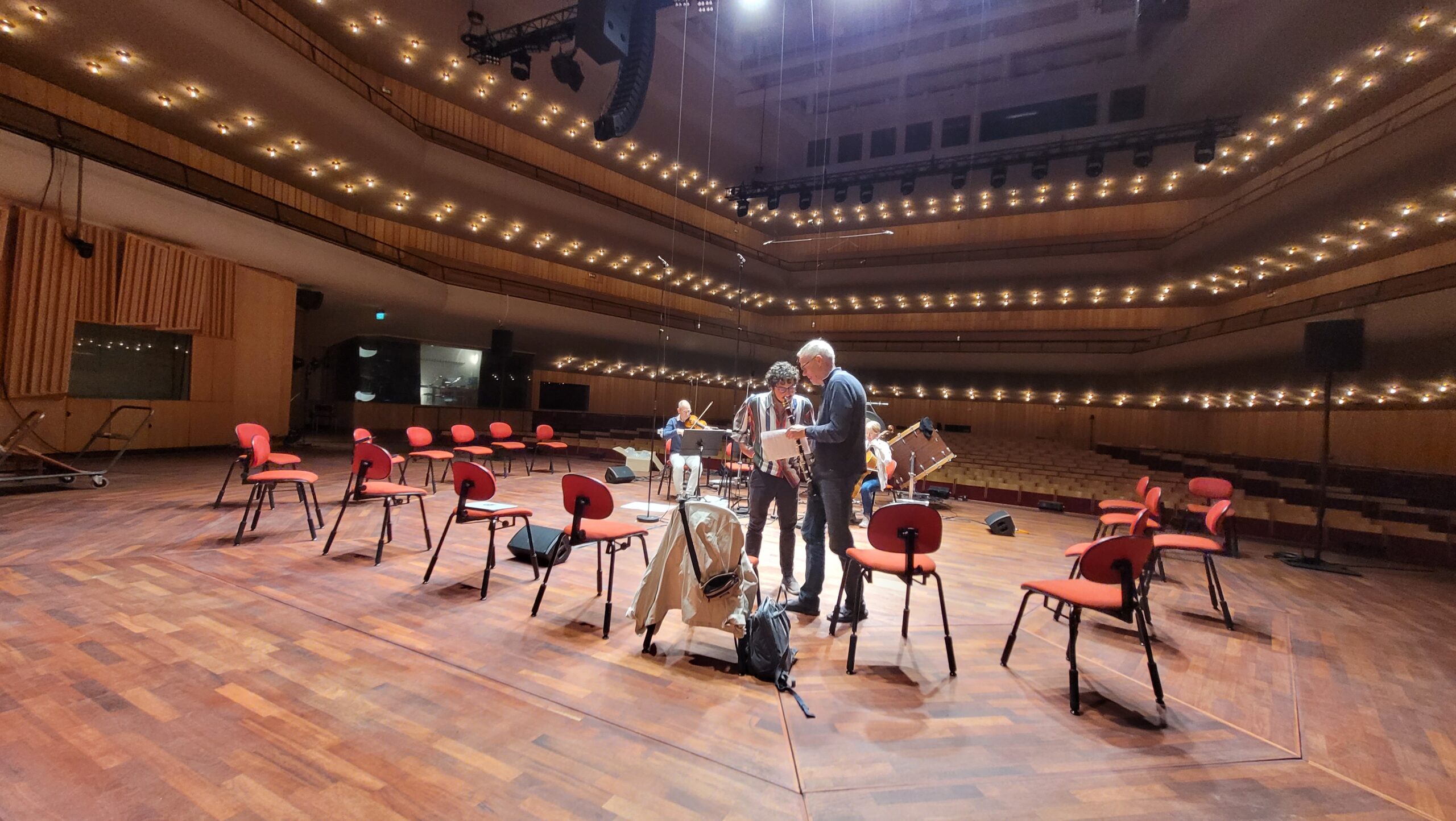
The whole experience was incredible. Emilia had the chance to rehearse in the radio and Bervardhallen concert halls under the guidance of Swedish radio director Elisabet Ljungar. Explaining science to children is one thing, explaining it to musicians is another, and creating a musical-science piece that would capture the attention of the demanding Bervardhallen audience was a whole other challenge.
It was a real spectacle: one scientist transformed himself on stage into a cable bacterium, while another discussed chemical risks in a piece of music with a short tune from Britney Spears’ “Toxic”.
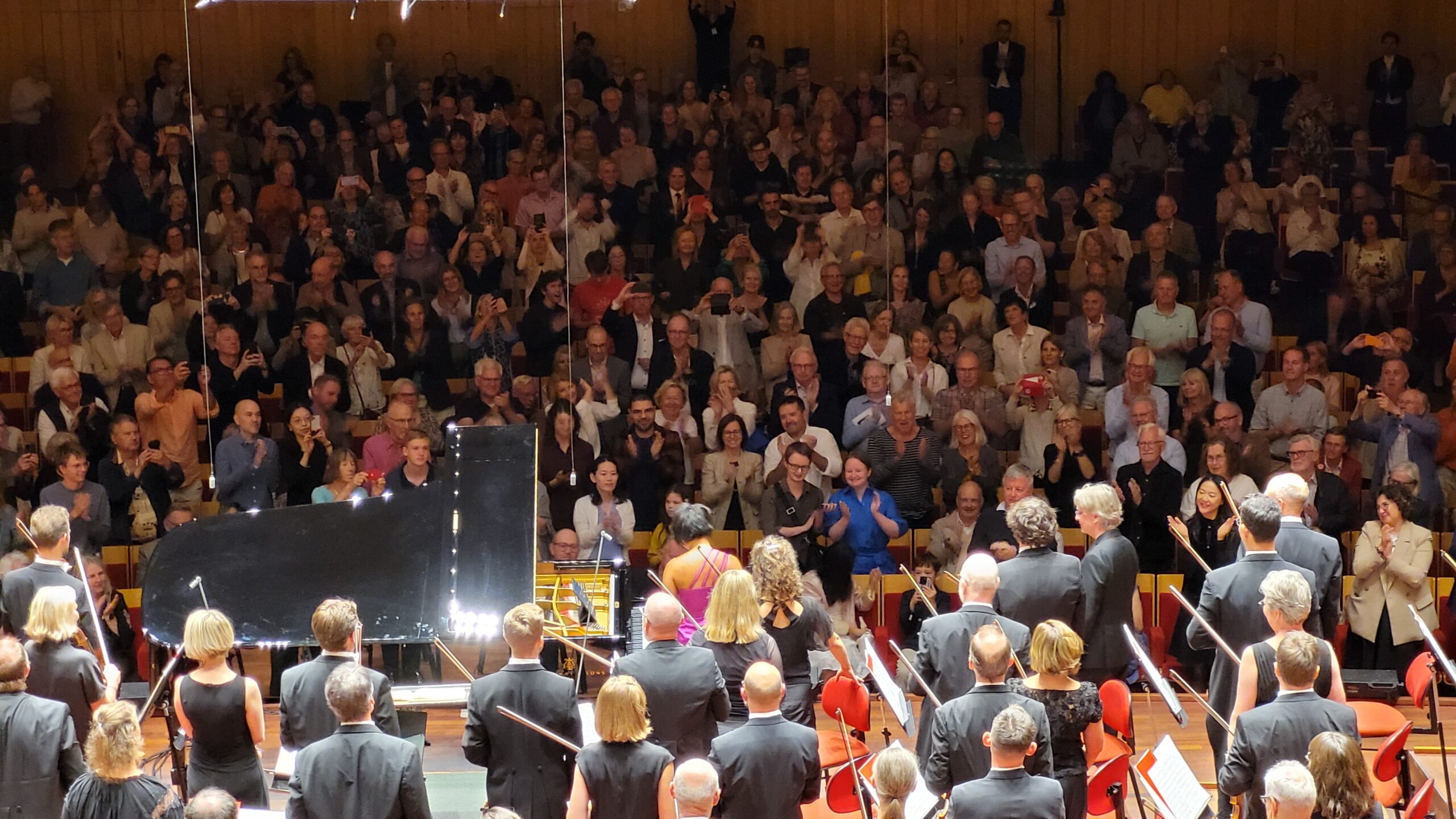
Between rehearsals, performers and composers were invited to attend other Baltic Sea Festival concerts. Performing on the same stage as famous musicians who had received a standing ovation was a real challenge.
Following the performance, scientists, musicians and composers were invited to celebrate in the KTH Reactor Hall. This hall originally housed Sweden’s first nuclear reactor, the R1 research reactor. It was operational between 1954 and 1970.
What a great experience! Many thanks to the organisers for selecting our work, for pairing me with Luis, and to Luis for translating electronic tongues into music.