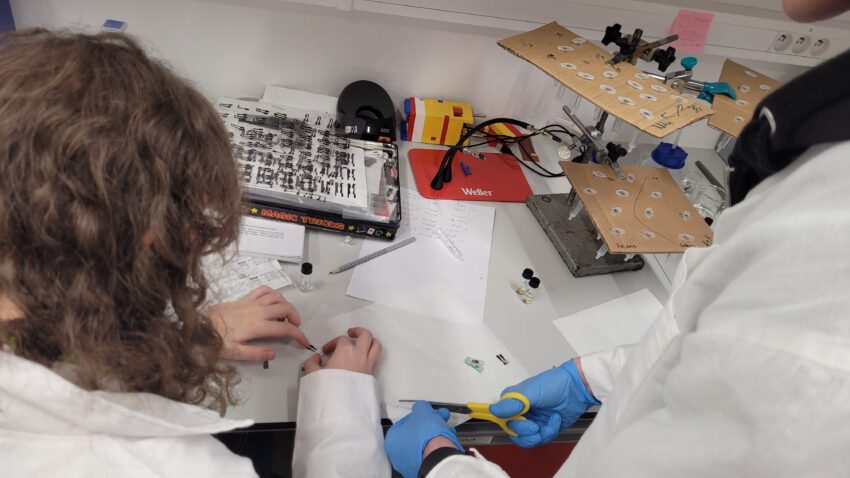
Each year, Professor Waluk organises short-term laboratory internships for students from Krajowy Fundusz na Rzecz Dzieci. This year, the Sensor Arrays group also took part in this project and, on 9 of Dezember 2024, welcomed 4 students who had the chance to learn about the science behind the group’s recent publication.
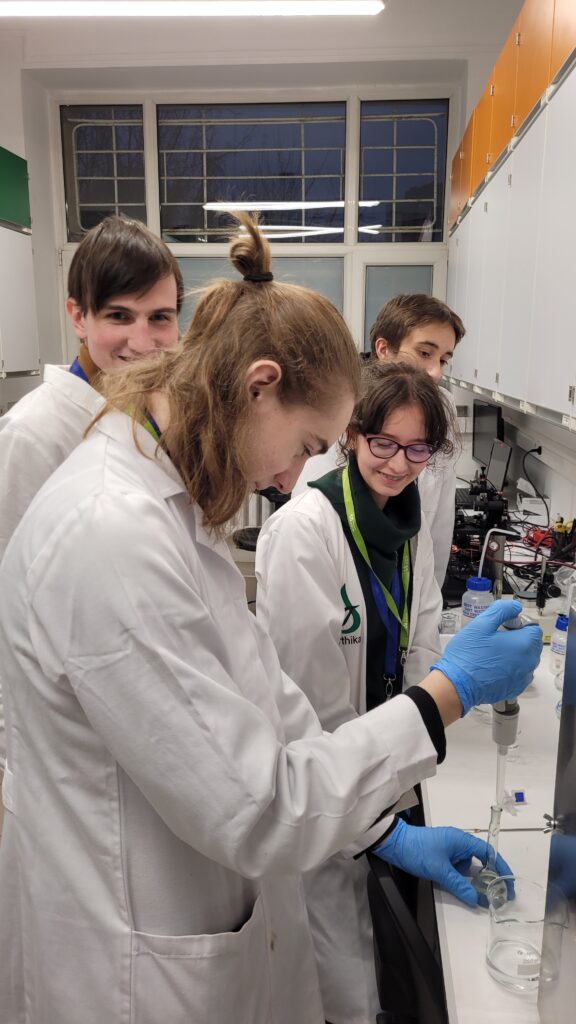
choosing from three different architectures:
- traditional electrodes with an internal electrolyte,
- solid‑state electrodes,
- low‑cost paper‑based electrodes.
Each team selected the approach that intrigued them most, resulting in a diverse and creative set of sensors produced in the laboratory.
Once constructed, the sensors were carefully characterised. The students measured repeatability and reproducibility, determined sensitivity and linear range by preparing calibration curves, and evaluated selectivity, which is crucial for distinguishing potassium from other ions commonly found in food.
Divided into teams, they designed and constructed their own potassium‑selective potentiometric sensors,
Despite their young age, the students asked insightful questions and worked with impressive determination. Their curiosity often led us to expand and rearrange the plan so we could explore the topics they were most eager to understand.
We look forward to welcoming more young talent in the future!