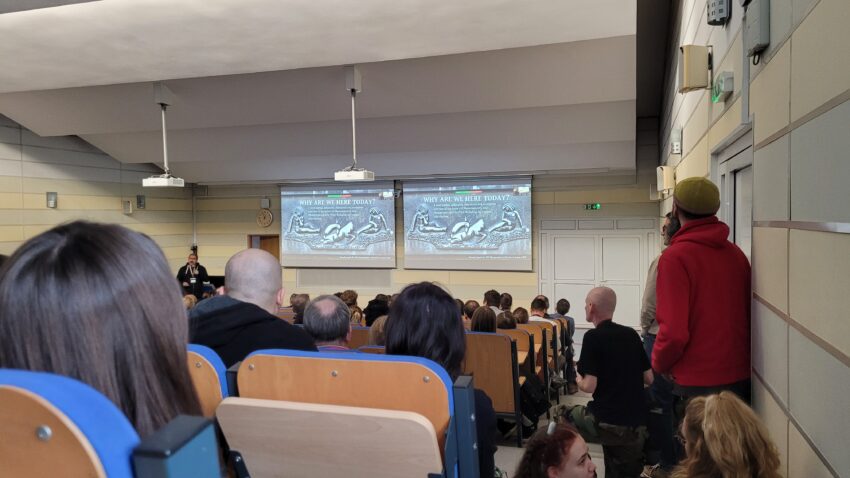
From January 13 to 15, 2025, the Institute of Physical Chemistry (IChF) held its annual reporting Microsymposium, which for the first time welcomed members of the newly established International Advisory Board (IAB). The three-day event provided a comprehensive overview of the Institute’s scientific achievements in 2024. It served as an important forum for direct dialogue…
Category: General news
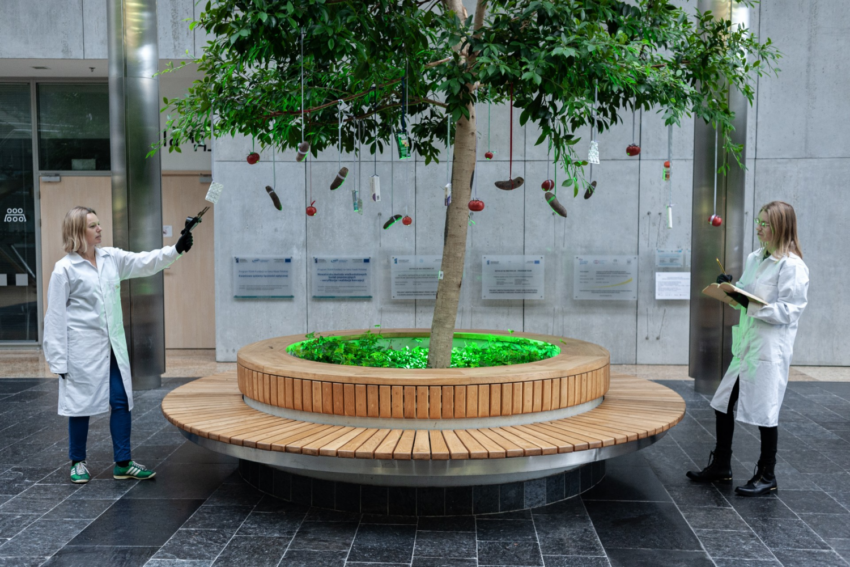
Syringe sensors go pop-science
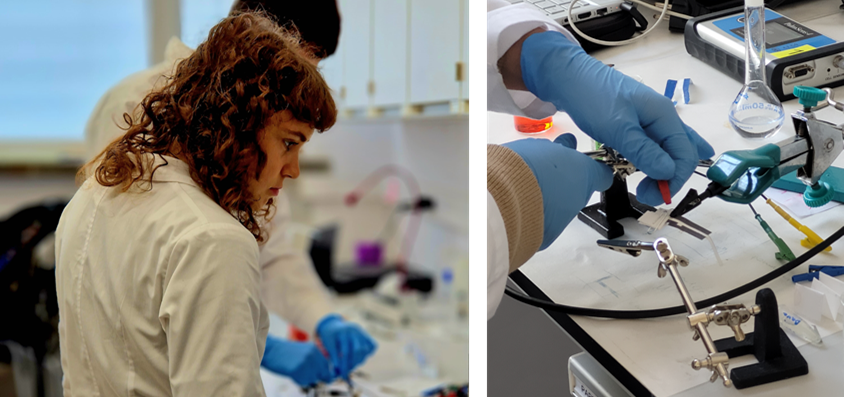
This story started as a means to make ends meet in a startup. The syringe‑based sensors were originally developed within a Sensoliq startup project, in which the group developed a sensor array capable of evaluating taste-masking strategies for Adamed’s pharmaceutical formulations. Sensoliq needed a large number of potentiometric sensors of traditional construction (with an internal…
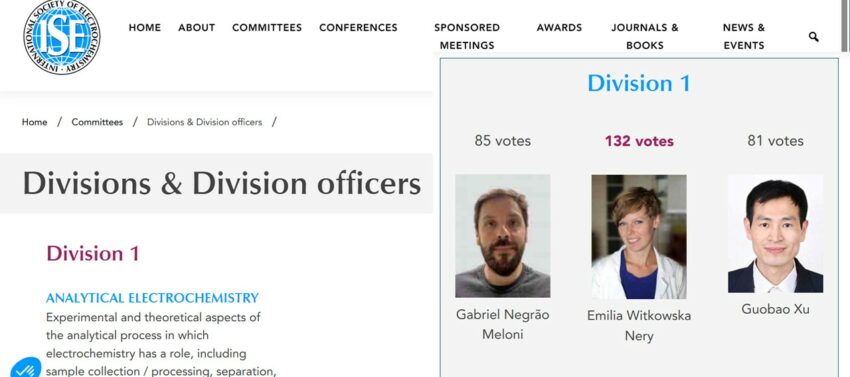
Emilia chosen chair-elect of Division 1 of the International Society of Electrochemistry
The International Society of Electrochemistry (ISE) plays a central role in advancing electrochemical science worldwide by fostering collaboration, supporting early‑career researchers, and promoting excellence across diverse subfields of electrochemistry. The society’s annual meeting brings together thousands of electrochemists. One of the Society’s key strengths lies in its scientific divisions, which provide focused communities for discussion,…
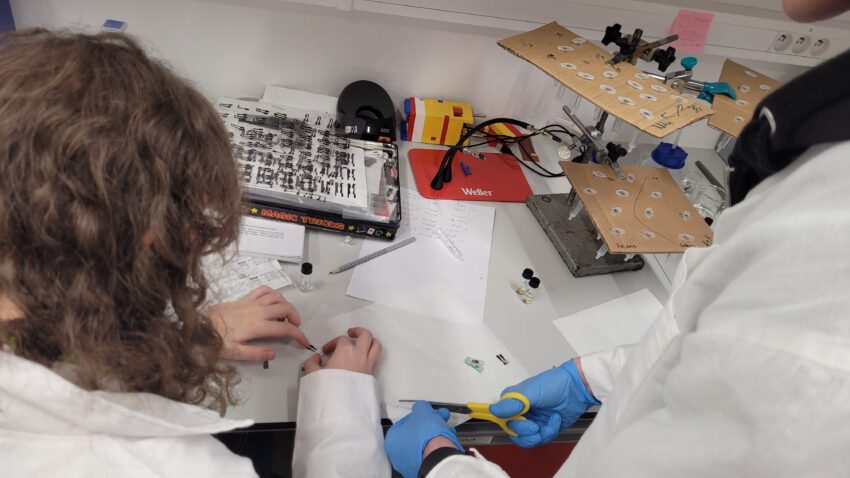
Exploring the World of Potentiometric Sensors with students from Krajowy Fundusz na Rzecz Dzieci
Each year, Professor Waluk organises short-term laboratory internships for students from Krajowy Fundusz na Rzecz Dzieci. This year, the Sensor Arrays group also took part in this project and, on 9 of Dezember 2024, welcomed 4 students who had the chance to learn about the science behind the group’s recent publication. choosing from three different…
Group integration
With two new group members joining us, we decided it was the perfect moment to spend some time together outside the lab. We met on 29 November 2024, starting the outing with a relaxed walk through Łazienki Park, enjoying the gardens and autumn scenery, and a quick visit to a few of the museums in…
New group member -Joanna Koprowska
We are pleased to announce that Joanna Koprowska joined our research group on 15 October 2024. Joanna brings with her a strong interdisciplinary background, having just completed a double master’s degree at the University of Warsaw. In October 2024, she successfully defended her chemistry thesis and is currently finalising her second thesis in forensic chemistry….
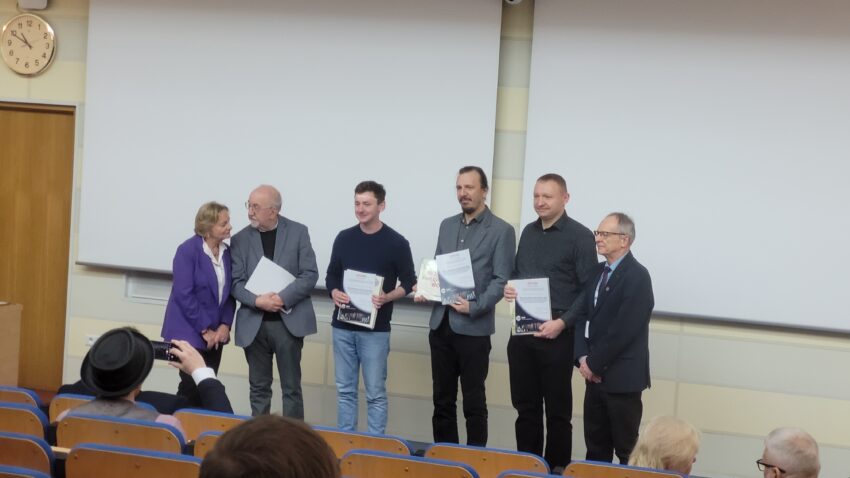
Steven is back (and already winning prizes)!
After 8 months at Aarhus University’s Interdisciplinary Nanoscience Centre (iNANO) in Denmark, from October 2024, Steven is (this time officially) again a member of the Sensor Arrays group. During his postdoc with Prof. Elena Ferapontova, Steven was learning about aptamers. Prof. Ferapontova’s research centres on the electrical and electrocatalytic properties of nucleic acids and enzymes…
Karthika’s PhD defence
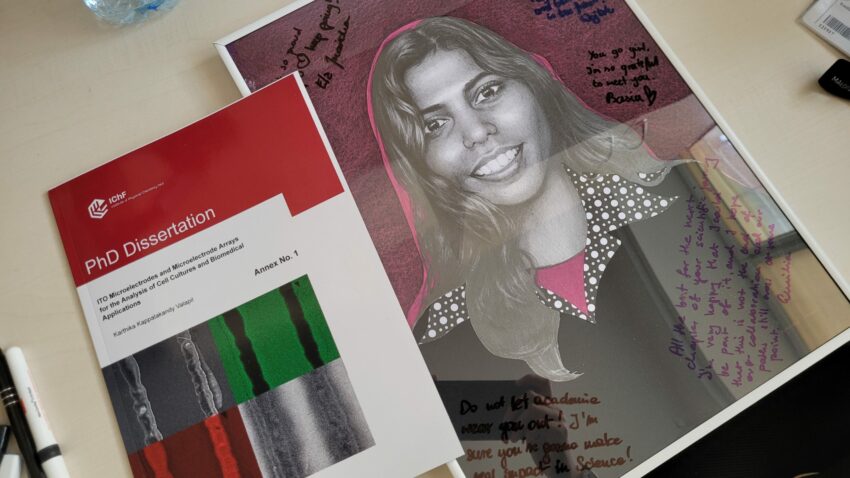
On 18 September 2024 at 11.30 Karthika presented the results of her thesis entitled “ITO microelectrodes and microelectrode arrays for the analysis of cell cultures and biomedical applications” and answered questions from the three referees: Karthika became the first person to be formed under the Sensor Arrays group! Karthika comes from Kannur, Kerala, India. Emilia…
Summer intern Basia working on paper-based and biphasic systems
In September we had a short-term group member from Poznan University of Technology. Barbara Piechel, a BSc student at the Faculty of Chemical Technology, worked with Emilia on the newly started project aimed at detecting date rape drugs. The internship also marks the beginning of closer cooperation between IPC PAS and Poznan University of Technology,…
Elżbieta’s publication in Electrochimica Acta
Elżbieta’s paper “Low-cost, syringe based ion-selective electrodes for the evaluation of potassium in food products and pharmaceutical” has recently been accepted in Electrochimica Acta. The article deals with the quantification of potassium in real samples using an electronic tongue based on low-cost syringe electrodes.Ion-selective electrodes (ISE) are well known potentiometric sensors that allow rapid, non-invasive…