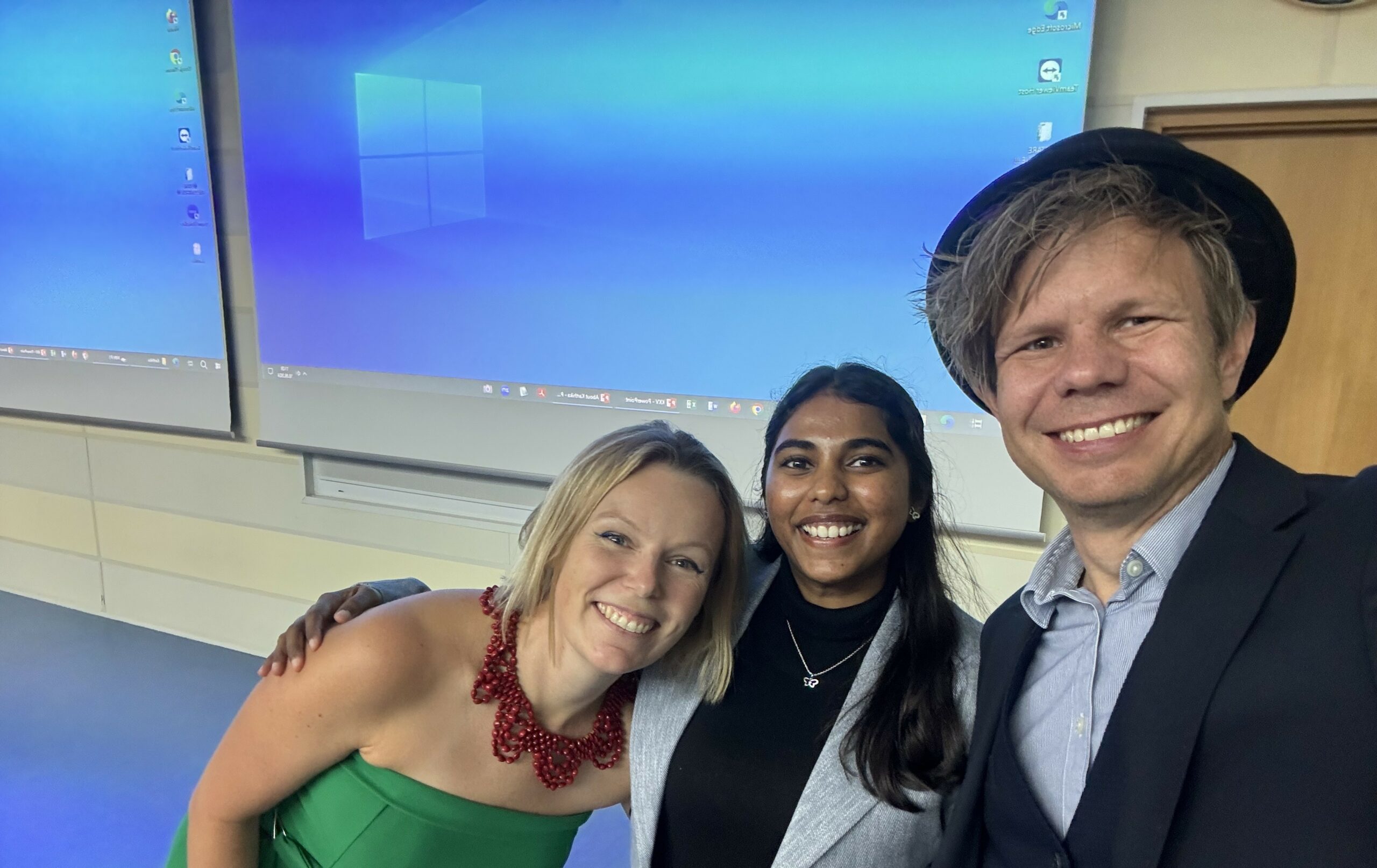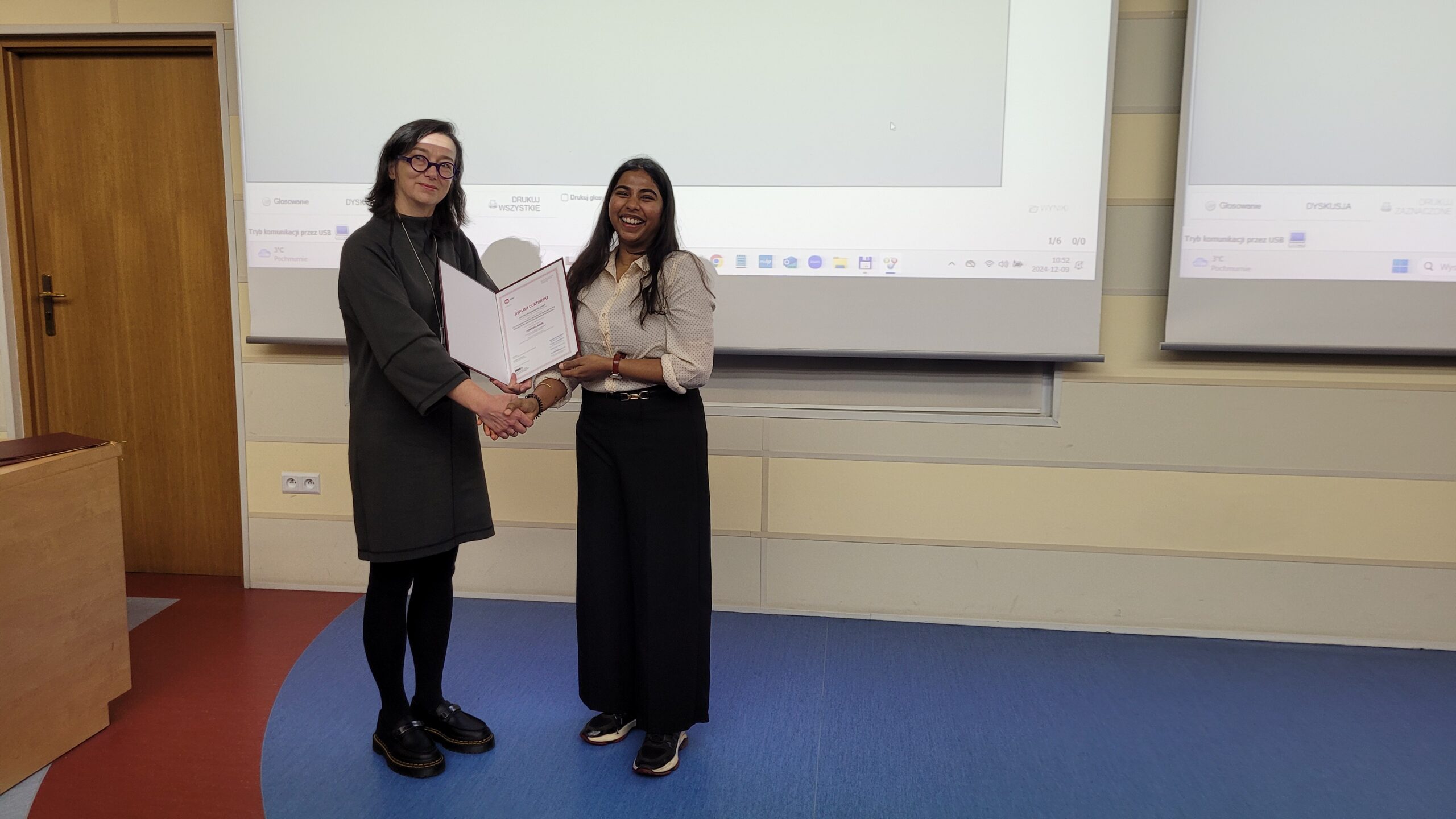
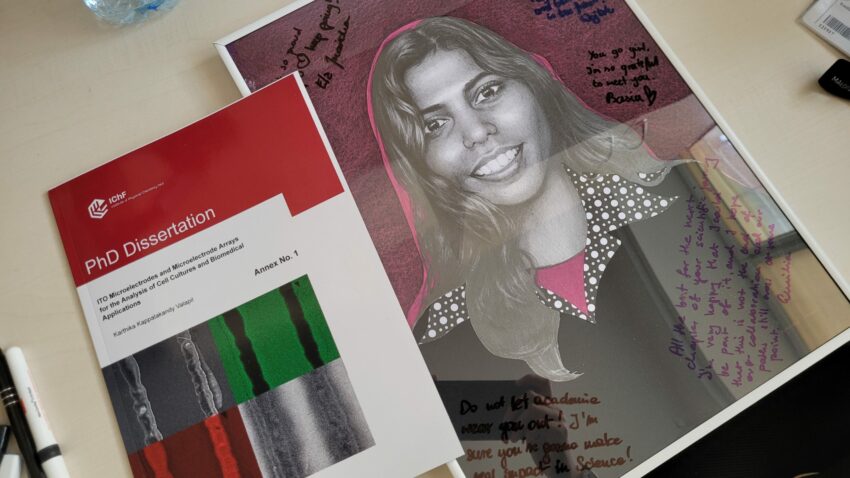
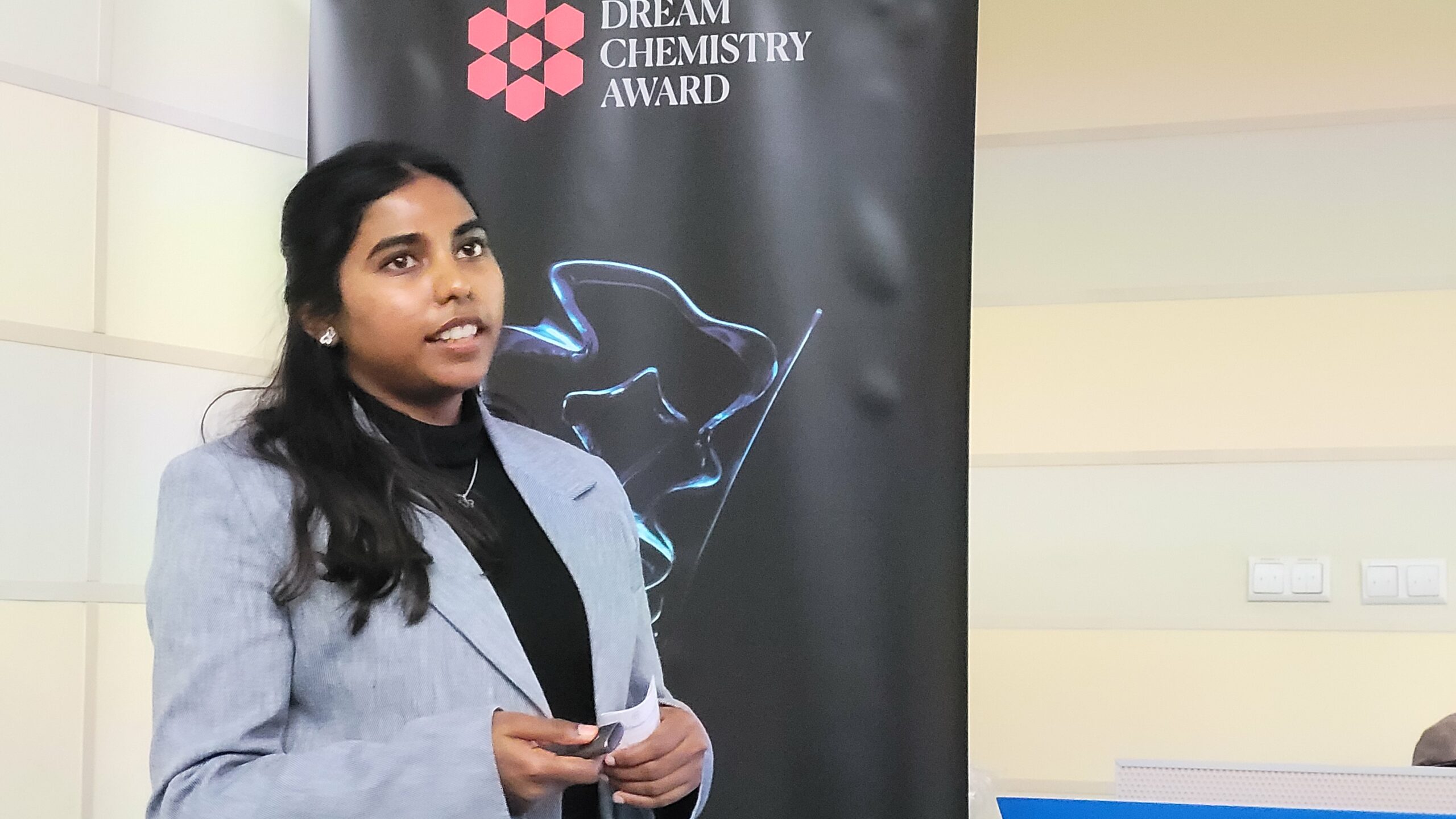
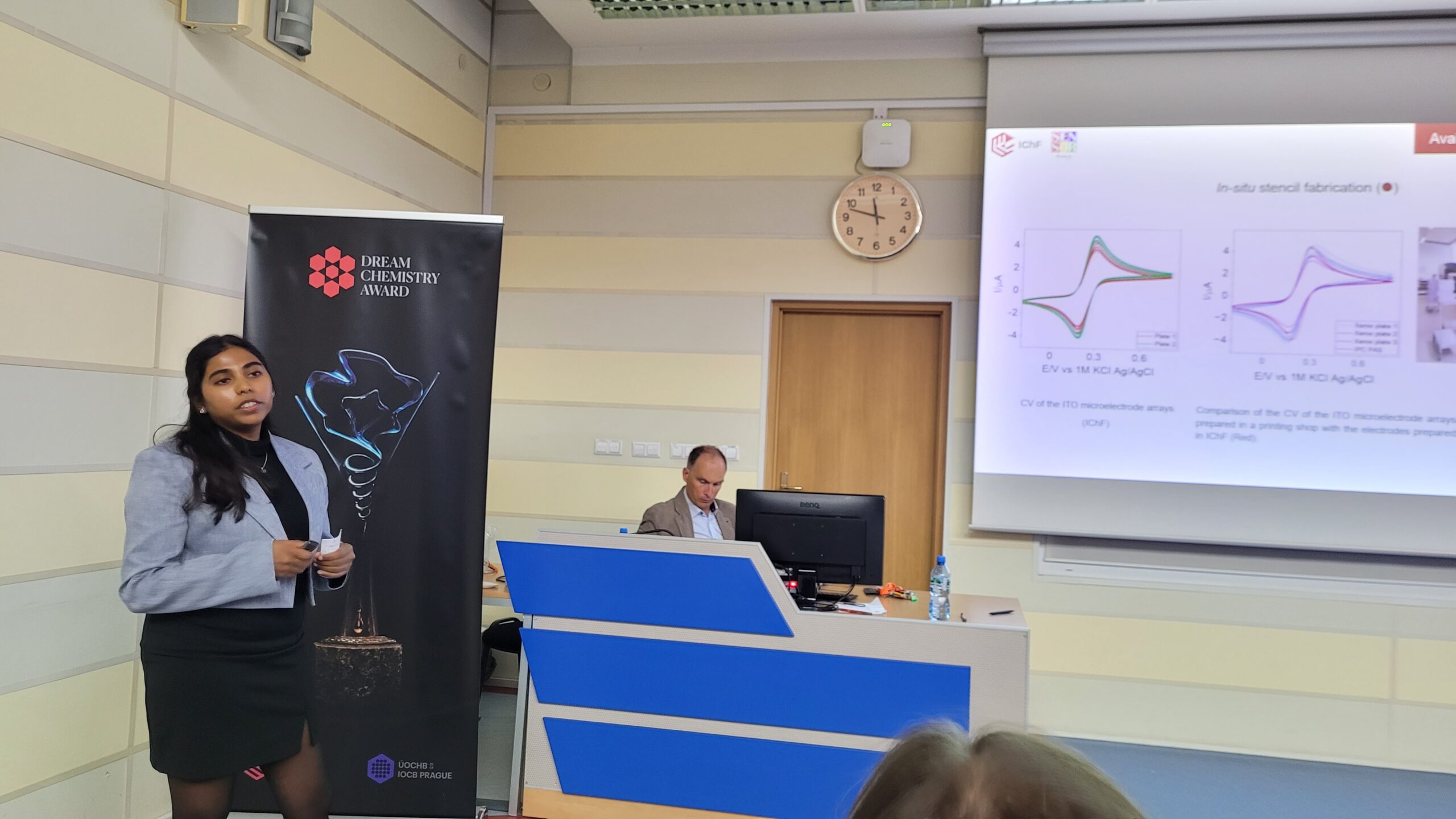
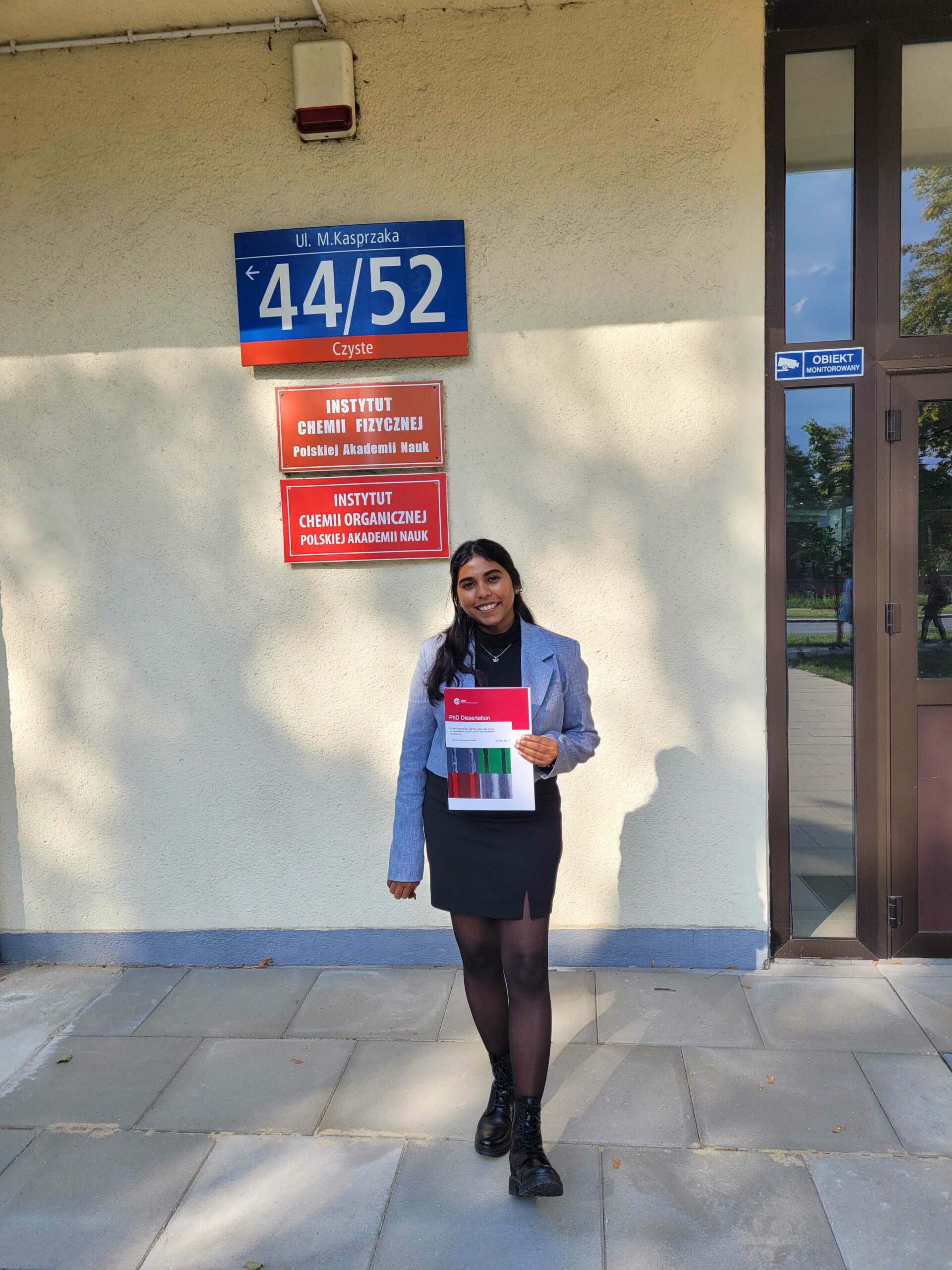
On 18 September 2024 at 11.30 Karthika presented the results of her thesis entitled “ITO microelectrodes and microelectrode arrays for the analysis of cell cultures and biomedical applications” and answered questions from the three referees:
- prof. Łukasz Górski, Warsaw University of Technology
- prof. Jacek Ryl, Gdańsk University of Technology
- prof. Ewa Nazaruk, Warsaw University
Karthika became the first person to be formed under the Sensor Arrays group!
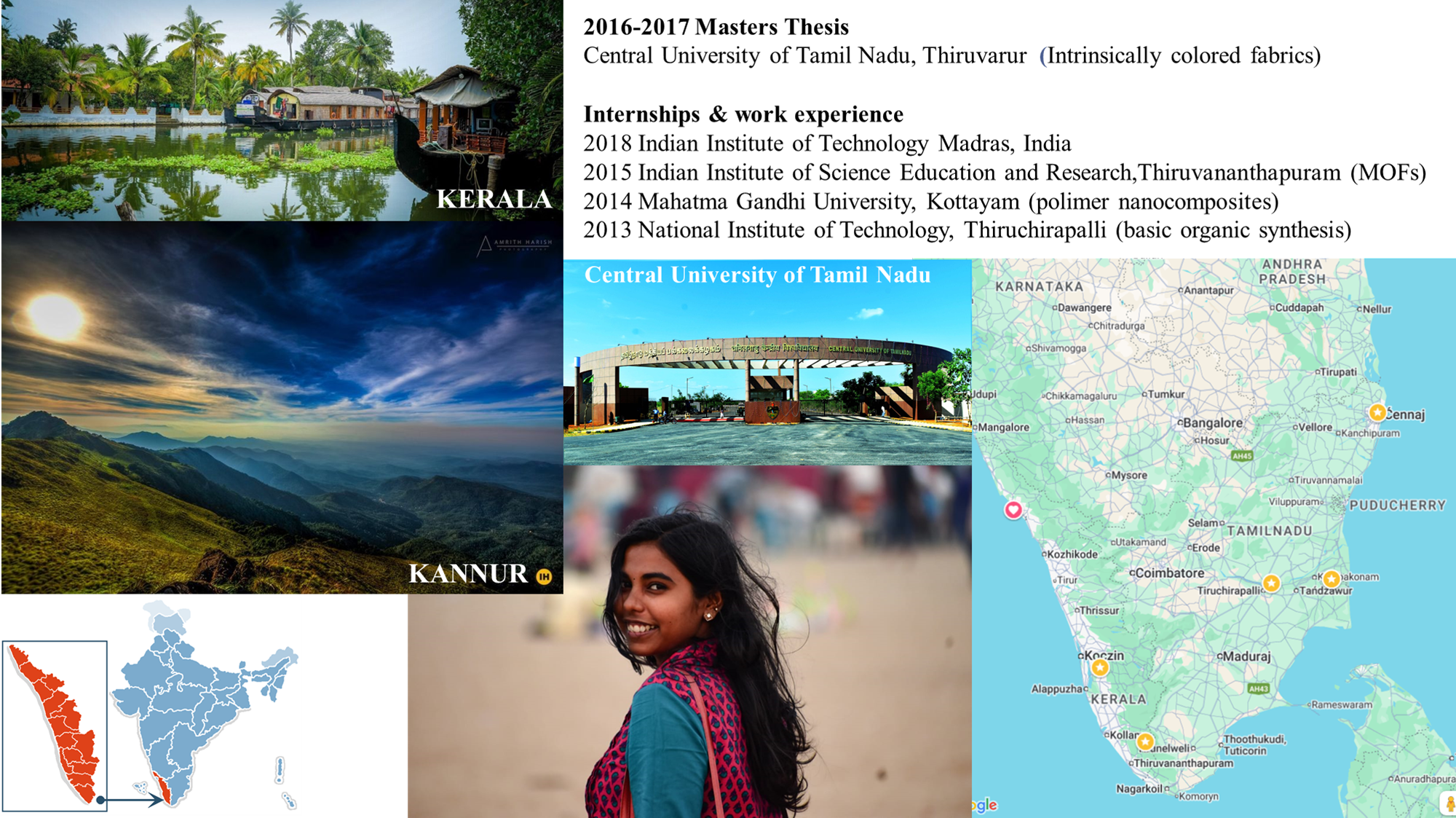
Karthika comes from Kannur, Kerala, India. Emilia and Karthika immediately found a common language as neither knew what would be the most interesting thing to study, and they decided to discover it through internships in different types of laboratories.
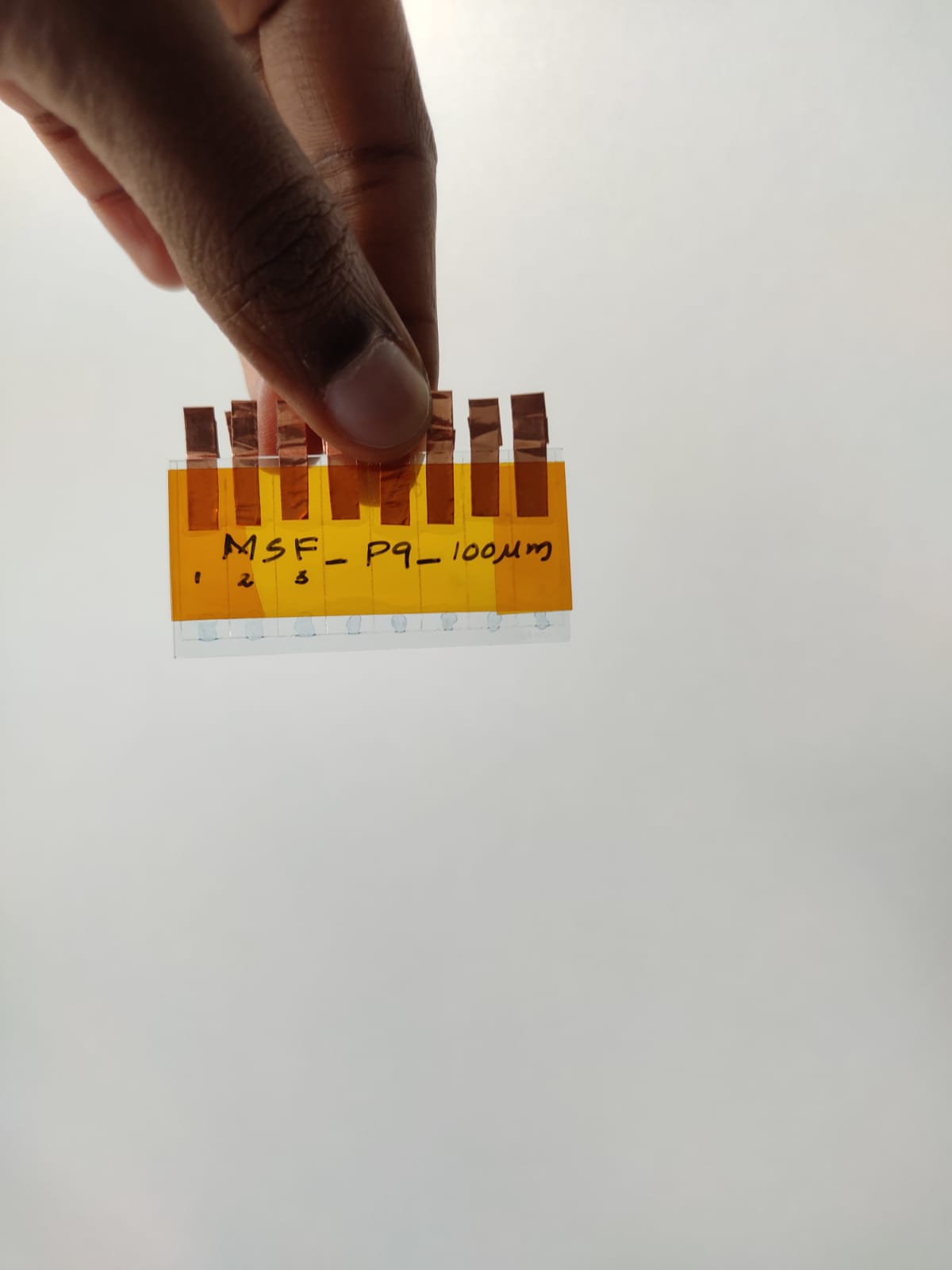
Her work focused on two topics: making electrode arrays that could be used in 3D cell cultures and synthesising mediators that would enable the detection of cell metabolites at lower overpotentials. She tried to fabricate electrode arrays through photolithography and later switched to a laser plotter. She developed a set of methods that allow the fabrication of very small (~25 um) features through direct writing on ITO or larger structures, but with the surrounding ITO layer removed using laser-cut tape stencils and etching.
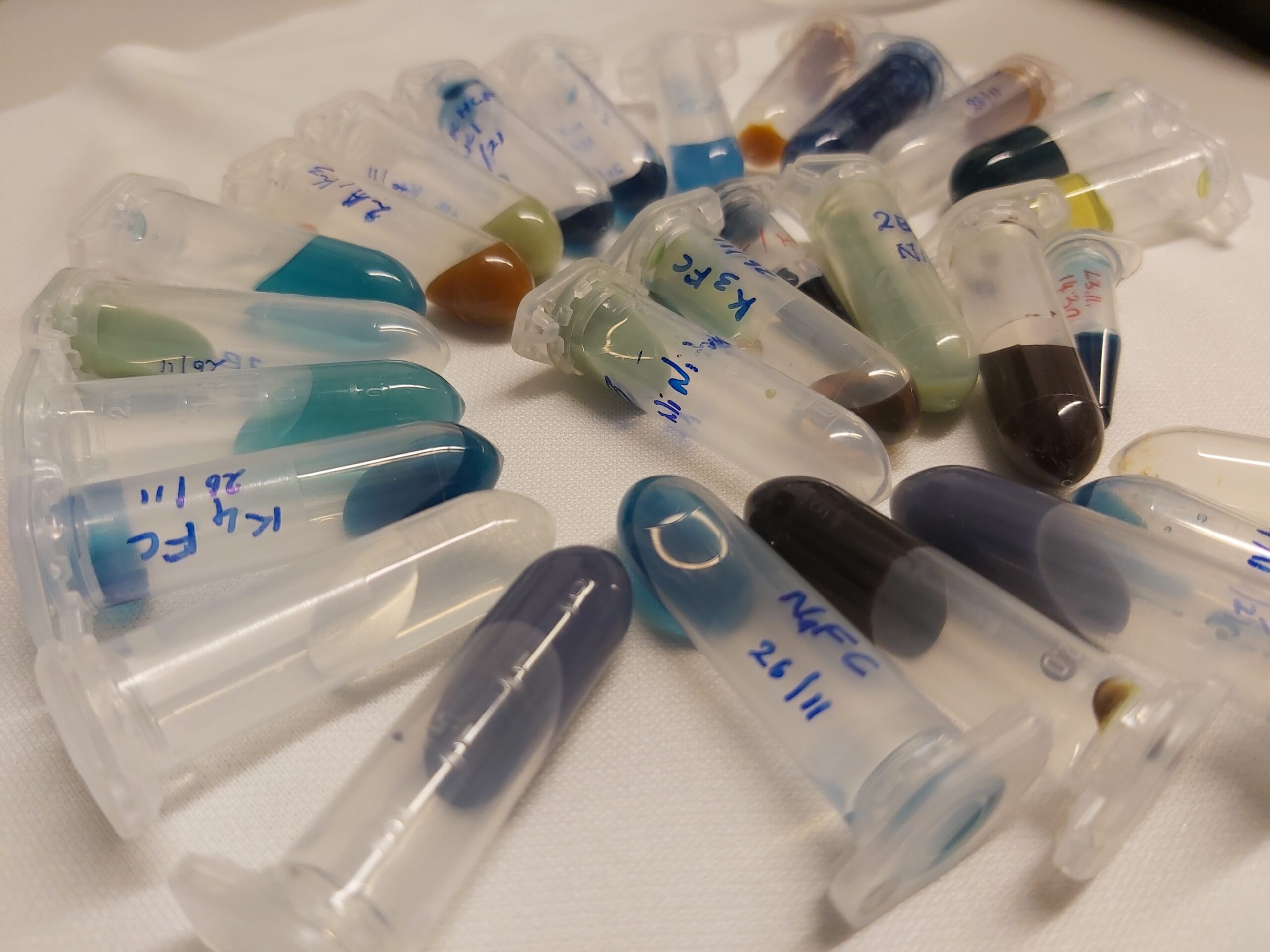
She also worked on osmium polymers that, together with glucose oxidase, could be used for glucose sensing in cell cultures, just like in the prick tests in glucometers. However, they were not stable enough for long-term sensing. Next, she focused on Prussian blue and its analogues that could be more stable and, similarly to osmium complexes, enable glucose detection at a low overpotential with a lower impact from interfering species.
This post could go on and on, describing the struggles (especially with the residence card and visa to Canada) and the successes, how you will always be Miss Marysia’s ‘laleczka’, e-SPARK filming, the trip to Switzerland and research with Prof. Girault’s group at EPFL, and many more.
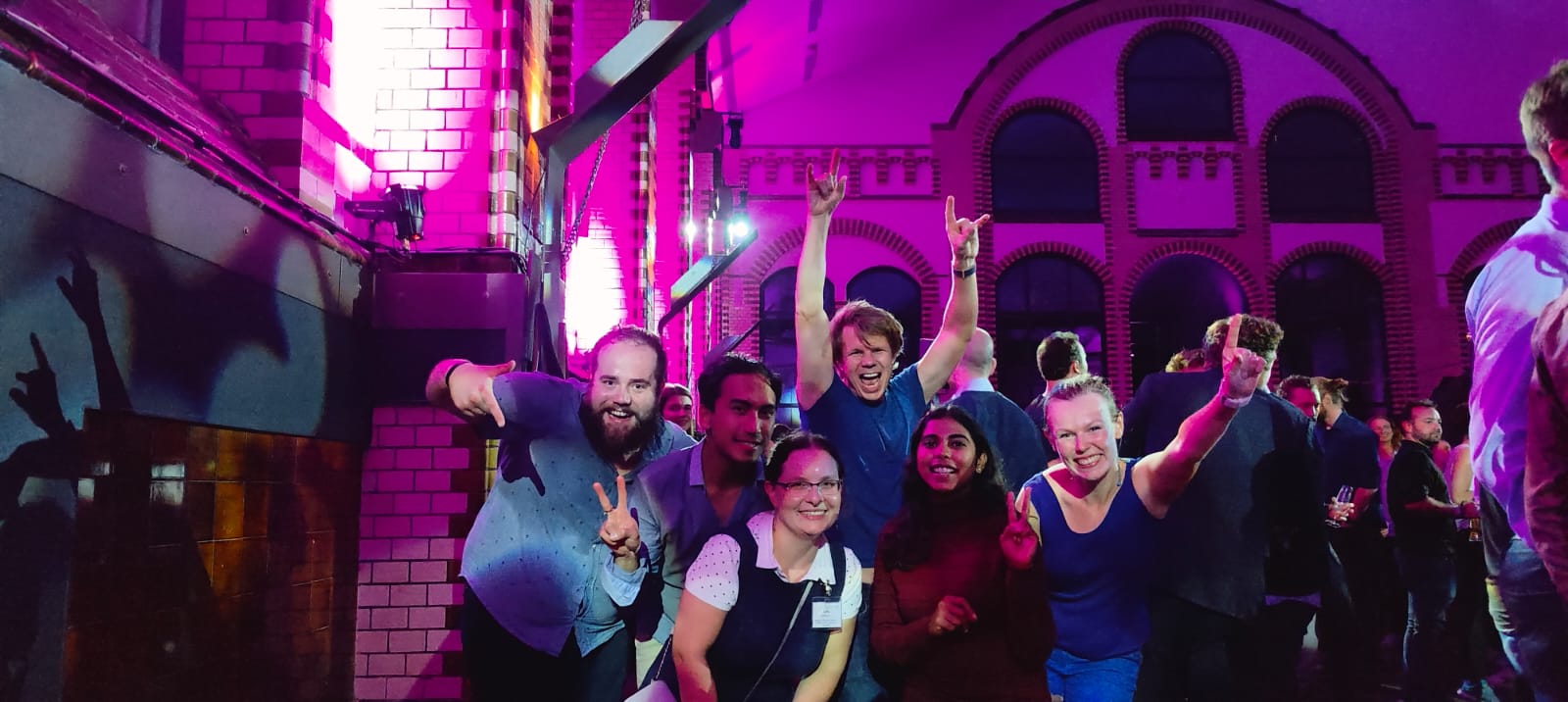
We will miss you greatly, and we all hope to meet again, whether for collaboration or a party.
All the best on your journey, and thank you for starting your independent research with us!