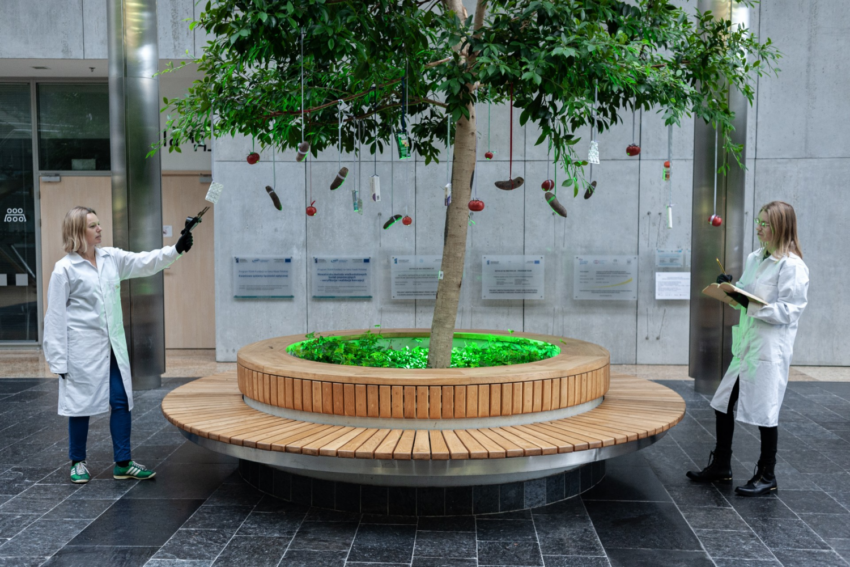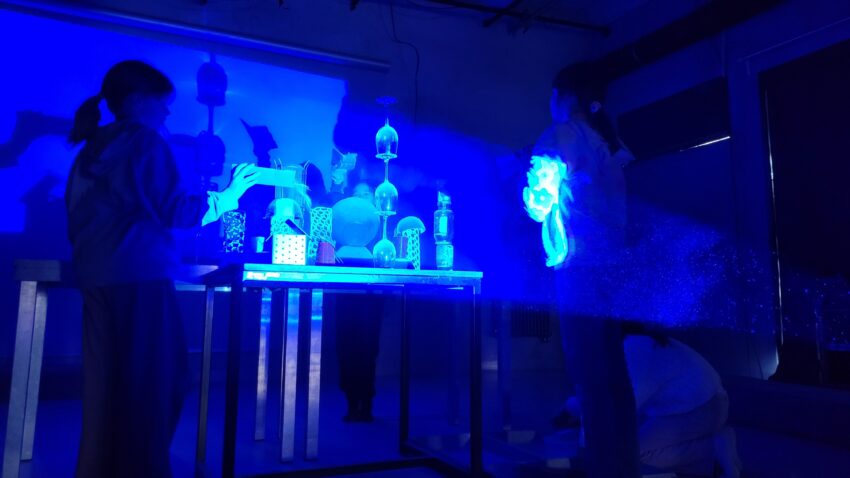
On 23rd November 2024, Emilia performed alongside the artist Gabriela Żylińska at Nowy Teatr in Warsaw as part of the programme ‘Ciała stałe, myśli lotne i inne zjawiska przyrodnicze’ (Solids, volatile thoughts and other natural phenomena). The theoretical presentation was interspersed with various experiments designed to stimulate children’s thining about senses. How complex is the…
New team member -Ntanhaning Medonjeu Morel Brinda
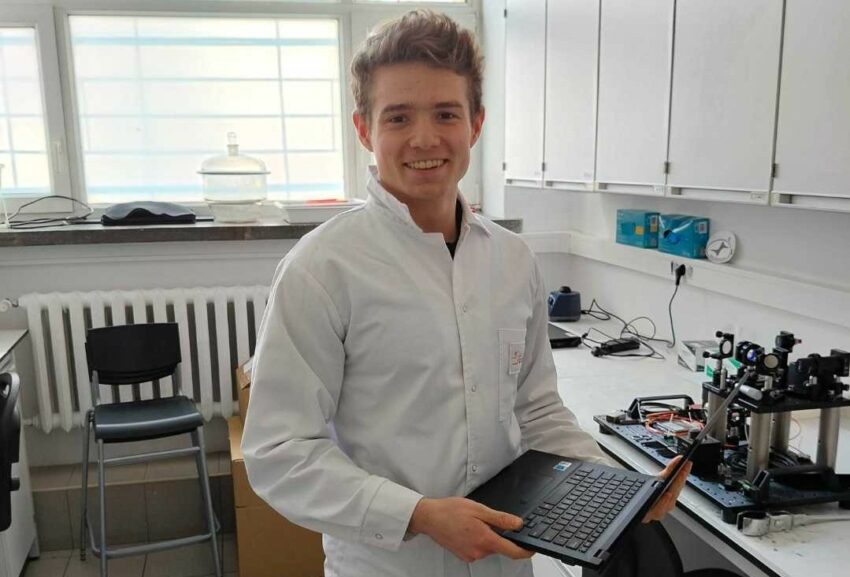
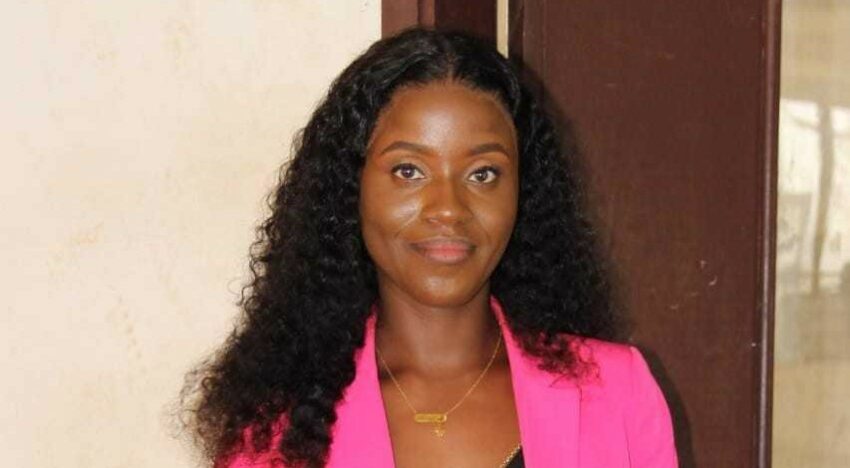
We are delighted to welcome a new member to our research team Ntanhaning Medonjeu Morel Brinda, who joined us on 22 November 2024 to begin her PhD journey within our NCN Sonata BIS project. She brings exceptional academic achievements, strong motivation, and a deep passion for electrochemistry and analytical chemistry. Ntanhaning received her Master’s degree…
Emilia explores methods to study metals in chemistry and biology at the 4th French BIC School
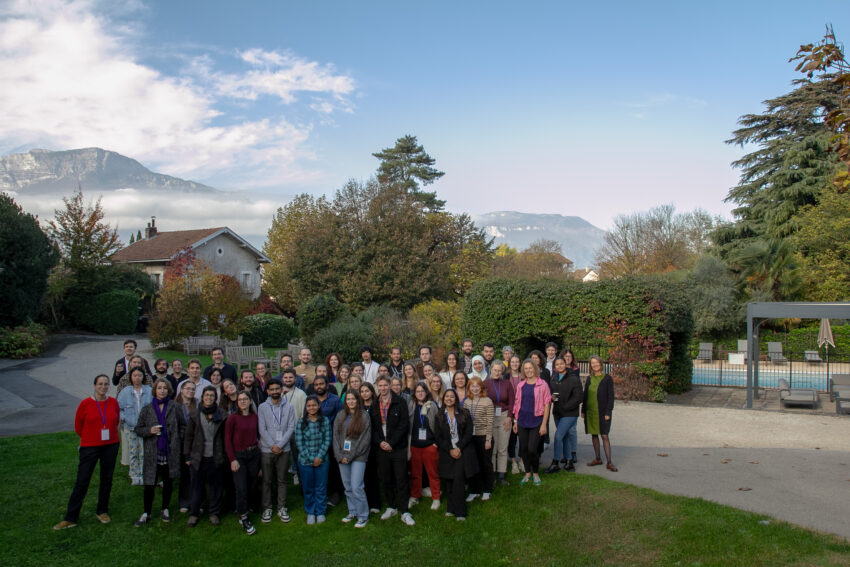
Between 4th-8th of November 2024 Emilia participated in the 4th FrenchBIC school on methods for studying metals in chemistry-biology in Grenoble. The school gathered participants working in bioinorganic chemistry and related fields in a beautiful Le Chateau de la Commanderie. It provided an overview of current methodologies and their applications in studying metal ions, metalloenzymes,…
New group member -Joanna Koprowska
We are pleased to announce that Joanna Koprowska joined our research group on 15 October 2024. Joanna brings with her a strong interdisciplinary background, having just completed a double master’s degree at the University of Warsaw. In October 2024, she successfully defended her chemistry thesis and is currently finalising her second thesis in forensic chemistry….
Steven is back (and already winning prizes)!
After 8 months at Aarhus University’s Interdisciplinary Nanoscience Centre (iNANO) in Denmark, from October 2024, Steven is (this time officially) again a member of the Sensor Arrays group. During his postdoc with Prof. Elena Ferapontova, Steven was learning about aptamers. Prof. Ferapontova’s research centres on the electrical and electrocatalytic properties of nucleic acids and enzymes…
Karthika’s PhD defence
On 18 September 2024 at 11.30 Karthika presented the results of her thesis entitled “ITO microelectrodes and microelectrode arrays for the analysis of cell cultures and biomedical applications” and answered questions from the three referees: Karthika became the first person to be formed under the Sensor Arrays group! Karthika comes from Kannur, Kerala, India. Emilia…
Electronic tongues explained… in musical format
After months of preparation, on 28 August 2024, Emilia had the opportunity to present science at one of Sweden’s top concert halls. As part of the Baltic Sea Festival, organised by Swedish Radio, a Science Lab session was held. This is an outreach initiative in which six scientists from around the Baltic coast were paired…
4th edition of the e-SPARK summer school
From 23 to 27 September 2024, for the fourth time, our department hosted 13 students from all over the world during the e-SPARK Summer School on Experimental Electrochemistry. For the first time, we decided to offer compulsory courses (cell design and cyclic voltammetry) and elective courses. In addition to the courses from previous schools, we…
Summer intern Basia working on paper-based and biphasic systems
In September we had a short-term group member from Poznan University of Technology. Barbara Piechel, a BSc student at the Faculty of Chemical Technology, worked with Emilia on the newly started project aimed at detecting date rape drugs. The internship also marks the beginning of closer cooperation between IPC PAS and Poznan University of Technology,…
Elżbieta’s publication in Electrochimica Acta
Elżbieta’s paper “Low-cost, syringe based ion-selective electrodes for the evaluation of potassium in food products and pharmaceutical” has recently been accepted in Electrochimica Acta. The article deals with the quantification of potassium in real samples using an electronic tongue based on low-cost syringe electrodes.Ion-selective electrodes (ISE) are well known potentiometric sensors that allow rapid, non-invasive…